Pressekontakt
ADAC e.V.
Oliver Runschke
Motorsport- und Klassik-Kommunikation
Tel.: +49 89 7676 6965
Mobil: +49 171 555 6236
E-Mail: oliver.runschke@adac.de
Kay-Oliver Langendorff
Leiter Partnerschaften, Kooperationen & Sponsoring
Leiter Kommunikation Motorsport & Klassik
Tel.: +49 (0)89-7676 6936
Mobil: +49 (0)171-555 5936
E-Mail: kay.langendorff@adac.de
07.07.2026 - MotoGP Sachsenring
Tradition, innovation and goosebumps: The special Sachsenring
- Evolution – new MotoGP safety standards implemented for 2026
- Yvonne Catterfeld to sing the German national anthem at the Grand Prix
- Minister President of Saxony, Michael Kretschmer is patron of the Grand Prix
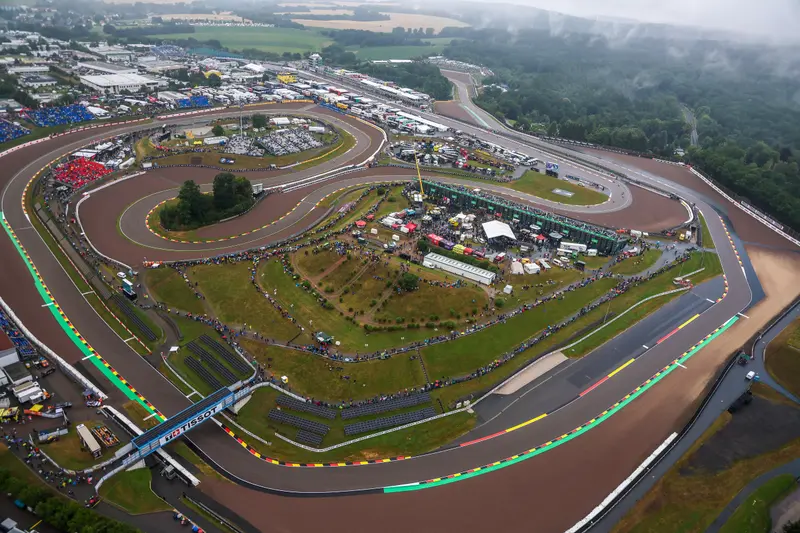
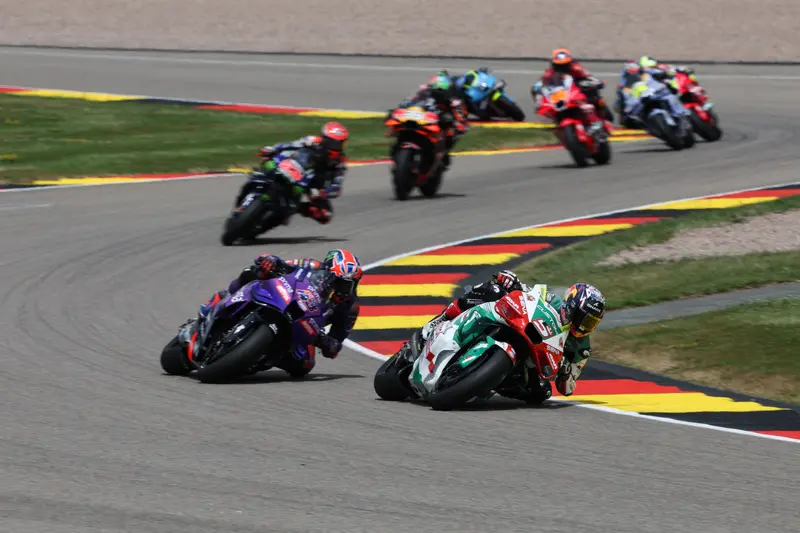
Hohenstein-Ernstthal. MotoGP returns to the Sachsenring in just a few days: from 10th to 12th July, the circuit in Saxony will host the Liqui Moly Motorcycle Grand Prix of Germany - one of the biggest sporting events in the country. So, what makes the only German round of the MotoGP championship so special? Almost 100 years of history, a fan culture with cultural heritage status, and a circuit that is developing technologically with every year, and will this year thrill fans with a special moment and a popular music star.
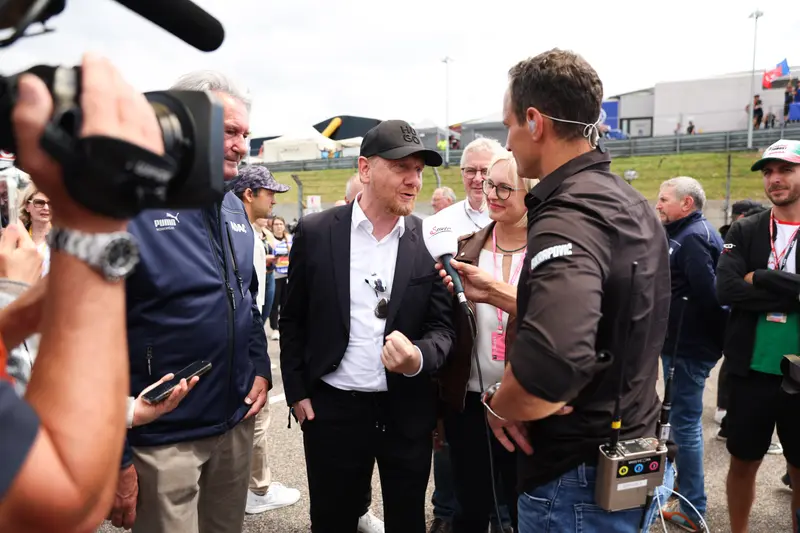
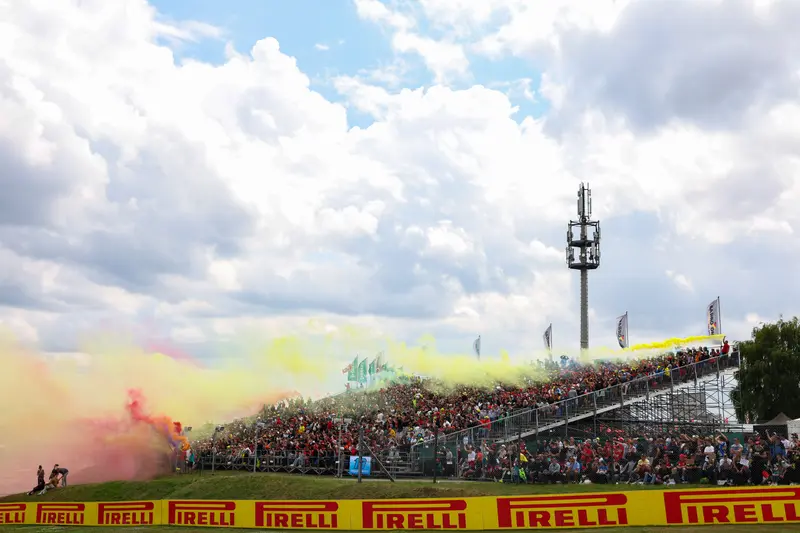
Back in spring of this year, the fan culture at the Sachsenring was included in the Saxon state list of Intangible Cultural Heritage - recognition of something that has grown around the Grand Prix across a history stretching back almost a century. The free state has also proposed the fan culture for the National Register of Intangible Cultural Heritage; the decision will be made in spring 2027. The political world is also behind the event: Michael Kretschmer, Minister President of Saxony, has taken on the role of patron this year.
Almost 100 years old - but always with its finger on the pulse
The Sachsenring has been captivating people since 1927. As such, it is a circuit steeped in history - yet it has also always moved with the times: year by year, the Sachsenring has been developed together with officials from the FIM and MotoGP. All the latest MotoGP safety standards for 2026 have already been implemented: in various corners, additional asphalt strips have replaced the grass verges behind the kerbs, helping to avoid riders lose control of their bikes when they leave the track. The gravel bed in turn four has also been deepened. Anyone who strays offline in the Omega can now immediately and safely get back on track via a new return route. An additional air fence offer the drivers additional protection between turns six and seven. In total, 170 modules have been installed along 1,360 metres of the track.
One new innovation is set for its premiere at the Sachsenring: the MotoGP stars will line up further apart on the grid for the first time. This is to avoid crashes in the first few metres as the bikes get up to speed. The distance between the starting rows has been increased from nine to twelve metres, while the riders will now be four metres from the racer next to them on the grid, rather than three. This format will be implemented in all MotoGP races from now on. There will also be an additional lap counter on the finish line, which will be easier for the riders to read at speeds of over 240 km/h, as well as an enhanced fibre-optic network around the racetrack: this year, this will allow live interviews with the team principals on TV. In the future, it will also be used for the radio between riders, teams, race control, and television.
The Sachsenring is also special from a sporting perspective: a compact site with distinctive topography make it a circuit with plenty of character, and an unforgettable one for riders and fans alike. Marc Márquez talks of a special relationship with the circuit, Fabio Quartararo believes there is no place like it, and Fabio Di Giannantonio waxes lyrical about the atmosphere generated by the huge crowds. Jack Miller knows the region better than most: back in 2013, whilst riding for Racing Team Germany, the Australian spent a year living in Hohenstein-Ernstthal – in the house of his team principal at the time, Dirk Heidolf.
There is sure to be one more breath-taking moment just before the start of this year's race: on Sunday, popular singer and actress Yvonne Catterfeld will sing the German national anthem, before the fastest motorcycle racers in the world take to the track. A Grand Prix that has for a long time been one of the top dates on the World Championship calendar - and has another reason to celebrate in 2027: 100 years of the Sachsenring.